 Bihar Sarkar द्वारा मान्यता प्राप्त
5 Things Gymnastics Actually Builds in Young Children
Published 8 August 2026 · Kids Activity & Gymnastics Centre
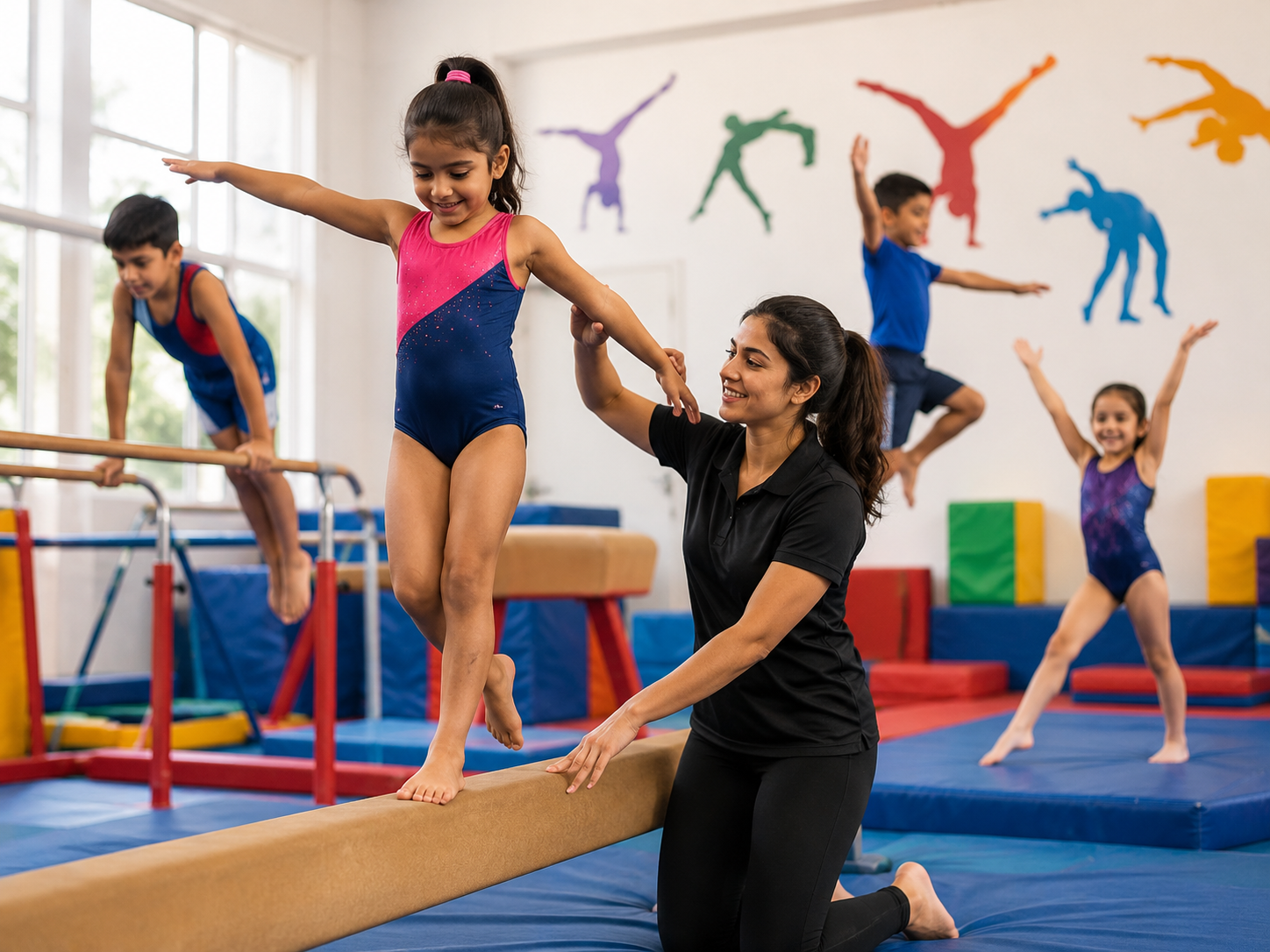
Gymnastics looks like a lot of flipping and jumping from the outside. What's actually happening underneath that, session after session, over months of coaching, is a bit less flashy but matters a lot more for a child's overall development. Here's what we actually see change in children who join our gymnastics program in Rajeev Nagar.
1. Coordination
Almost every gymnastics movement asks the body to do several things at once - balance, direction, timing, and awareness of where your limbs are in space. A cartwheel, for instance, requires a child to coordinate their hands, feet and core in a specific sequence while also managing momentum. That repeated coordination work carries over into everyday movement, other sports, and even fine motor skills like handwriting in younger children, since both rely on the same underlying motor planning ability.
2. Strength, built gradually
Bodyweight movements - hanging, climbing, holding positions, basic tumbling - build functional strength at a pace appropriate for a child's body, without needing equipment, weights or adult-style training. This kind of strength shows up in small ways parents often notice first: a child who used to need help climbing playground equipment suddenly doesn't, or who could barely hold a plank for ten seconds now holds it for thirty.
3. Following instructions under pressure
Attempting a new skill on a beam or mat requires a child to listen carefully and apply multi-step instructions in the moment, often while managing a bit of nervousness about trying something new. That's a skill that shows up well beyond the gym - in following a teacher's instructions at school, in team sports, and in everyday situations where a child needs to process what they're told and act on it, rather than just hearing it.
4. Confidence from real progress
A child who couldn't do a cartwheel three months ago and now can has evidence, not just praise, that effort works. That's a meaningfully different kind of confidence than being told "good job" for participation alone. Coaches structure classes so that progress is visible and specific - a new skill mastered, a longer hold achieved, a cleaner landing - which gives children something concrete to feel proud of.
5. Comfort with trying and failing
Gymnastics involves a lot of attempts that don't work before one that does. Falling off a low beam, not quite landing a roll, needing five tries at a skill that looked easy when the coach demonstrated it - all of this is completely normal in a gymnastics class. Coaches structure this so it stays encouraging rather than discouraging, and children get used to trying again without it feeling like a big deal. That comfort with imperfect first attempts is one of the more underrated benefits, since it applies directly to how a child approaches schoolwork, new friendships and anything unfamiliar later in life.
What we notice over the first few months
In the first few weeks, most children are simply getting comfortable with the space, the coach and the routine. Around week six to eight, parents typically start noticing changes at home - better balance, more willingness to try physical challenges, occasionally better focus during homework. By three months in, most children have a small but real set of skills they can demonstrate, which tends to be the point where confidence visibly shifts.
How classes stay safe while children learn these skills
None of the above happens by accident - it depends on how a class is actually run. At our centre, every new skill is broken into smaller steps before a child attempts the full movement, proper crash mats and low equipment are used for anything involving height or momentum, and coaches physically spot children through unfamiliar movements until they're consistent enough to do it unassisted. Children are never pushed into a skill before they're ready, even if other children in the same batch have already moved ahead - progress is tracked per child, not per batch.
This matters because a lot of the confidence-building described above only works if a child genuinely trusts the environment. A child who's afraid of getting hurt won't take the small risks that build skill and confidence in the first place - so safety and confidence aren't separate goals here, they support each other directly.
If you're weighing gymnastics against fitness or yoga for your child, a trial class is usually the fastest way to see whether it clicks - no amount of reading replaces watching your own child's reaction to an actual session.