 Bihar Sarkar द्वारा मान्यता प्राप्त
Choosing an Activity Program for an Autistic Child in Patna: A Parent's Guide
Published 8 August 2026 · Kids Activity & Gymnastics Centre
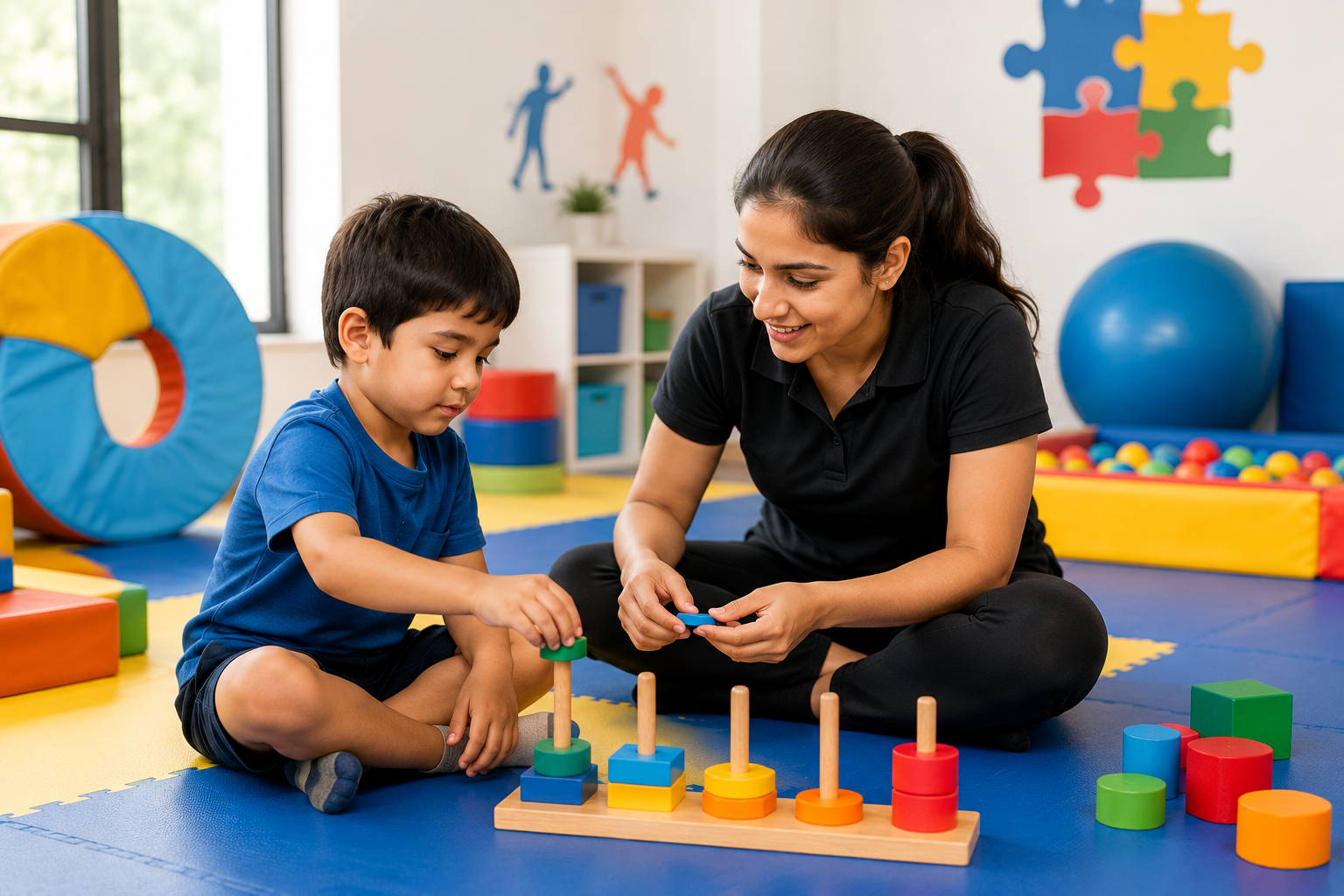
Parents searching for activity options for an autistic child in Patna often tell us the same thing: they want their child to be physically active and included somewhere, but most regular classes aren't built with their child's comfort in mind, and they're not always sure what questions to ask before enrolling. This guide covers what we'd suggest looking for, based on running an inclusive activity program at our centre in Rajeev Nagar.
Start by being clear about what the program is - and isn't
A physical activity program supports participation, coordination and physical development. It is not a substitute for any medical, clinical, therapeutic or diagnostic care your family already has in place - and any centre that implies otherwise is worth being cautious about. The right framing is that activity classes work alongside existing therapy and care, adding a physical, social outlet rather than replacing anything clinical.
Ask about group size before anything else
Group size affects everything else. A coach managing a large batch simply can't give the kind of individual attention that makes a real difference for a child who needs more patience, a slower pace, or activities adjusted to their comfort level on a given day. Ask directly: how many children per coach? Smaller is almost always better here, even if it costs a bit more or means fewer batch time options.
Ask whether you can stay during the first few sessions
Many children - autistic or not - settle into a new environment faster with a parent present initially. A centre that's comfortable with parents observing or staying nearby during early sessions is usually a good sign of a flexible, child-first approach, rather than a rigid one-size schedule that requires immediate separation.
Share information before the first class, not after
Whatever helps a coach understand your child in advance - sensory sensitivities, specific comforts or triggers, what has worked well in other settings, how your child communicates - is worth sharing before the first session rather than letting a coach learn by trial and error. A good centre will ask for this proactively; if they don't, offer it anyway.
Expect variability, and look for a centre that expects it too
Some sessions will go better than others - that's normal and not a sign anything is wrong. What matters is whether the centre treats this as expected and adjusts accordingly, rather than treating an off day as a problem to fix or a reason to push a child harder. Ask how coaches handle a session where a child isn't engaging as usual; the answer tells you a lot about their actual approach versus their marketing.
Look for honest, regular communication
You should hear specific, honest updates from coaches - what your child participated in, what they seemed comfortable or uncomfortable with, not just generic "had a great class" messages. This kind of detail is a reasonable sign that a coach is paying real attention rather than running the same session for every child regardless of how they're responding.
A short list of questions worth asking any centre
How many children are in a typical group? Can a parent stay, especially early on? How do coaches adjust pace or activity choice per child? What happens if my child doesn't want to participate in part of a session? Do you share updates after each class, and how detailed are they? A centre that answers these clearly and specifically, rather than vaguely, is usually one that has actually thought through how it runs an inclusive program.
If the first trial session doesn't go smoothly
A difficult first session isn't necessarily a sign the program is wrong for your child - new environments are hard, and a single session rarely reflects how things will go once a routine is familiar. What matters more is how the centre responds afterward: do they ask what specifically was hard, adjust the next session accordingly, and stay patient rather than treating it as a failed attempt? A centre that reacts to a rough first class with genuine curiosity about what would help, rather than pressure to "try harder next time," is one worth continuing with for a few more sessions before deciding either way.
Our own autistic kids activity program in Rajeev Nagar is built around these exact principles - small groups, parent involvement welcomed, and honest communication session to session. If you'd rather talk it through directly, call or message us and we're happy to answer questions before you decide on anything.